Ahmednagar surprised me with its layers of history
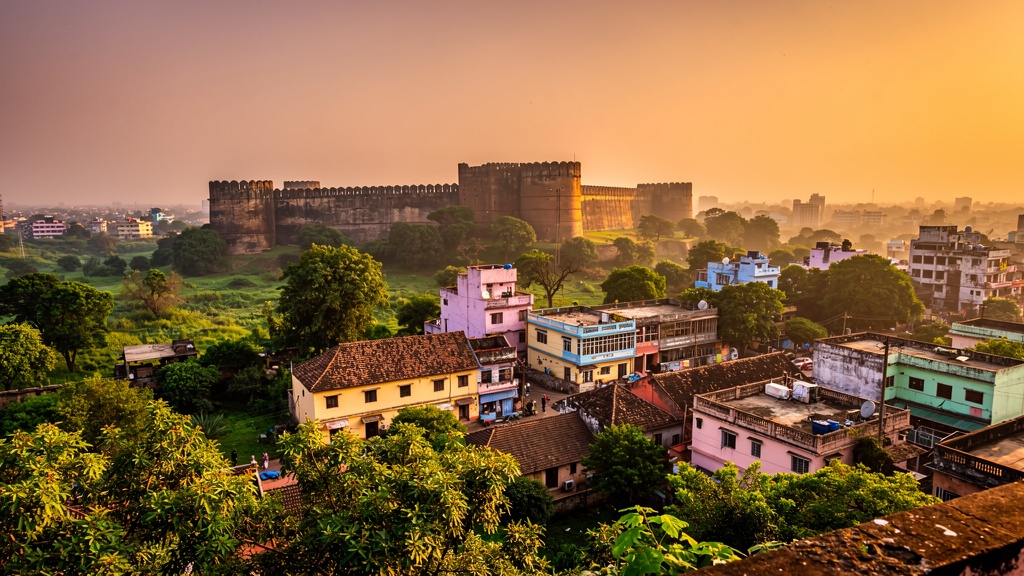
I expected the Ahmednagar Fort to be the main attraction, followed by a few places and monuments and shopping areas. Instead, the more I discovered about the city, the more complicated its story became.
Ahmednagar’s history did not seem to belong to just one period. Its story moved from the Nizams’ Shais to the Mughals, then to the Marathas and eventually the British. Even at first, the Ahmednagar Fort, which initially seemed an obvious place to begin exploring the city, turned out to hold stories from several different chapters of Indian history.
The fort was the first place I wanted to understand
Naturally, Ahmednagar Fort drew my eye initially. Built by Malik Ahmad Nizam Shah I, it dates to the city’s early years and later became part of the Nizam Shahi capital. Strengthened from mud to stone, it passed through Mughal, Maratha, and British control, each leaving its mark. The city’s history stretches back to the Mauryan period, and over time it became clear that Ahmednagar cannot be seen through a single timeline.
Chand Bibi made Ahmednagar’s history feel more human
Ahmednagar Fort was protected against Mughal armies by Chand Bibi, a regent of the Nizam Shahi realm. Before the fort finally collapsed in 1600, she repelled Prince Murad’s assault in 1595. Chand Bibi Palace, also linked to the city’s history, further reflects her presence in Ahmednagar’s past.
The way these narratives move the emphasis from dynasties and conflicts to the individuals behind them is noteworthy. Beyond the fort, Ahmednagar’s history is reflected in places like Bagh Rauza, Chand Bibi Palace, and Farah Bagh.
Ahmednagar has more than one kind of heritage
Although Ahmednagar Fort is the most prominent historical site, other locations also contribute to the city’s narrative. For instance, Bagh Rauza is associated with Ahmad Nizam Shah and the Nizam Shahi era; among the city’s historical landmarks, Maharashtra Tourism also lists Chand Bibi Palace and Farah Bagh.
I was amazed by how distinct these locations felt from one another. A fort is a symbol of political might and protection. A palace reflects a destination’s royal history. A garden represents a more subdued and contemplative aspect of a dynasty that is frequently associated with conflicts and succession disputes. As a whole, they give Ahmednagar the impression of being a city with several layers of history coexisting rather than a singular monument.
If I were planning a longer stay to explore these different sides of Ahmednagar, I would want to stay somewhere that made it convenient to move between the city’s historic sites and its everyday streets. Several hotels in Ahmednagar allow easy access to popular attractions.
The freedom struggle gave Ahmednagar Fort another identity
The fort’s connection to India’s freedom movement adds another layer of complexity just when I thought I knew it as a mediaeval landmark. Several well-known Indian leaders, including Jawaharlal Nehru, Sardar Vallabhbhai Patel, and Maulana Abul Kalam Azad, were imprisoned under extreme security in Ahmednagar Fort by the British during the Quit India Movement in 1942. While incarcerated there, Nehru penned “The Discovery of India”.
Once related to mediaeval battle, the same building was linked to India’s freedom movement. The individuals imprisoned there were now involved in a movement that would ultimately transform the nation as a whole, rather than battling for a Deccan kingdom.
Final thoughts
It wasn’t the quantity of historical sites I discovered in Ahmednagar that shocked me, but rather the interconnectedness of their narratives. From its beginnings as the Nizam Shahi capital to its later phases under Mughal, Maratha and British rule. Eventually, its links to the freedom movement added another layer to its identity.
Ahmednagar is more fascinating than I had anticipated because of this. Its history lives as overlapping tales that continue to influence the present, rather than feeling limited to the past.
The experience of finding these layers one after another, each revealed something I hadn’t previously observed, is what I will remember more than any one fort.